


The AI and B2B Marketing Challenge
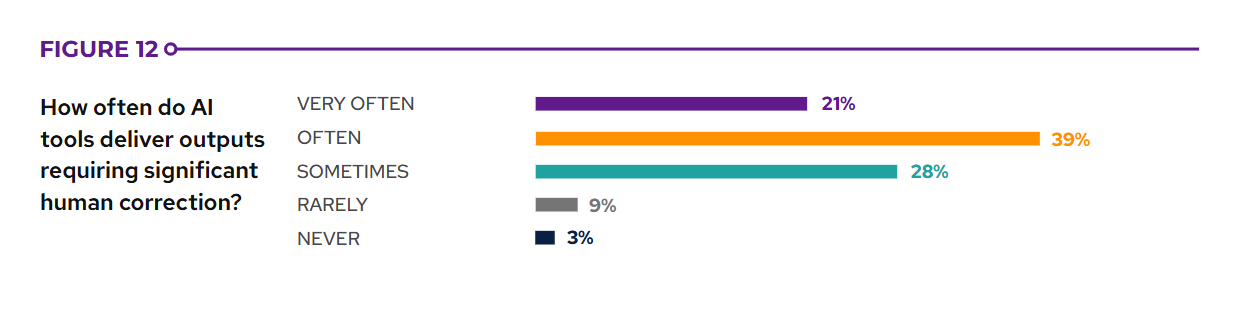
AI and B2B Marketing Limitations
In a survey of B2B marketing leaders, it is perhaps unsurprising that strategic thinking is the most cited AI limitation. Speaking in broad terms, marketing leaders are usually a product of their experiences, skills, expertise, and even worldviews - a unique blend creating a certain strategic disposition.
How an AI platform or LLM can be set up to mimic or even improve on the strategic decision-making capabilities of modern day B2B leaders remains to be seen, but, for now, the sense among B2B marketing leaders is that AI is not there yet.
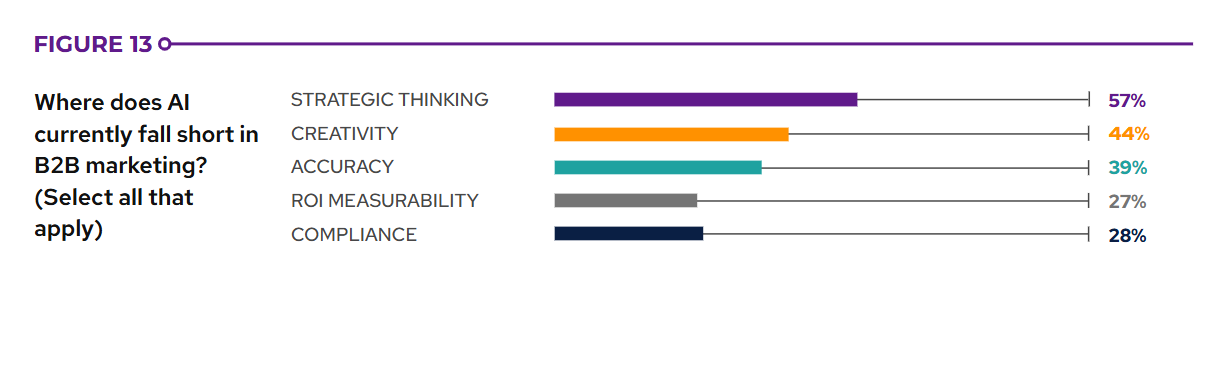
AI and B2B Marketing - A Strategic Hesitancy Emerges
Perhaps the biggest issue highlighted by our research is the fact that AI spend is rising at a time when a certain hesitancy, borderline skepticism is emerging around the use of AI in the more strategic B2B marketing use cases. The question then emerges that if we are in an AI race as the increased spending suggests - what does the destination look like?
Unless the strategic gaps are addressed, AI will continue to play a role that is primarily execution and productivity related. In this situation, the risk of marketing homogeneity and reduced quality output will continue to rise forcing companies to take a step back and consider their strategic direction.
Is AI itself a strategy or simply a lever to help execute a strategy? Our research suggests the latter.
For B2B marketing leaders, the challenge now becomes about harnessing AI tools in a way that makes sense for their business as opposed to rushing in a new solution that promises much but will only deliver if the strategy underpinning its implementation is solid. Managing expectations around the use of AI may also come to the fore as marketing leaders seek to balance the strengths and weaknesses of the various AI-based solutions available alongside the type of magical thinking inherent in much of the commentary around AI today.
What is clear is that at a time when B2B marketing is undergoing a significant transformation - there are some uncomfortable questions emerging around the limitations of AI that need to be addressed.