


Today's post is an excerpt from The MFS Guide to B2B Account Based Marketing.
There are a number of account based marketing (ABM) definitions floating around currently, but the one we like most is the definition put forward by Bev Burgess and others that terms ABM as a strategic cross-functional sales and marketing approach targeting high value accounts as markets in their own right.
ACCESS THE MFS GUIDE TO B2B ACCOUNT BASED MARKETING HERE →
Within ABM, there are a number of different approaches:
- One-to-One ABM or Strategic ABM: This approach is based on a highly tailored and personalized one off campaign targeting an individual account.
- One-to-Few ABM or ABM Lite: This ABM approach is based on campaigns that target a small number of accounts where the personalization element is based on commonalities between the targeted companies.
- One-to-Many ABM or Programmatic ABM: This approach is still based on the concept of personalization, but it uses technology to scale an ABM campaign towards a larger number of accounts that share common characteristics.
ABM v Demand Generation - Key Differences

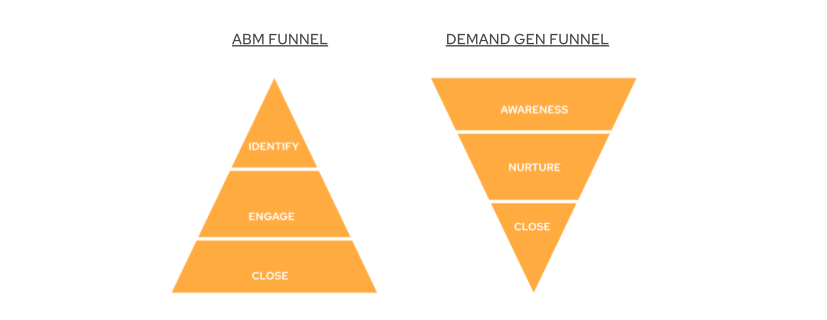
In spite of the differences between the two approaches, there is not necessarily an inference that one way is better than the other. In fact, demand generation and ABM both have an important role to play in the modern B2B environment and it is up to individual companies to figure out when and how to use each approach.
One example use case for the more general demand generation approach might be a situation where a startup makes an initial foray into an established market and is looking to build up brand awareness and win some early customers. Activities such as PR, SEO, and analyst relations may be used at this stage to attract some buyer interest. With market position established, a maturing company might think about implementing ABM to land some high value accounts. ABM is ideally suited to companies looking to grow their deal size and win some deals with companies in the Fortune 100.
A further advantage of ABM is that it can help companies make the most effective use of sales and marketing resources. With sales and marketing working together to land target accounts, the lead qualification debates get put to one side. Everything needs to be done in tandem. Sales and marketing resources are applied to an account or accounts where there is both an established need and the potential ROI for closing a deal is huge.
This post is an excerpt from the MFS Guide to B2B Account Based Marketing. If you would like to read more you can access the guide in full here. If you have a marketing challenge you are looking for support with, you are welcome to set up a no obligation initial strategy consultation with our team.