


Today's post is an excerpt from The MFS Guide to Competitive Strategy.
The proliferation of online competitive intelligence sources is such that the area of competitive research has become increasingly complex and resource-intensive. One of the best ways to add an element of structure to this task is to adopt a competitive analysis framework. There are a number of different approaches you can adopt - and each is not without merit. In this section, we will outline some of the most effective competitive analysis frameworks and the situations which they are most suited to.
1. SWOT Analysis
One of the most widely used analysis frameworks in business, a SWOT analysis charts the strengths, weaknesses, opportunities, and threats of a business. In terms of competitive analysis, a SWOT analysis can help you to pinpoint areas where your company is strong and competitors are struggling or vice versa.
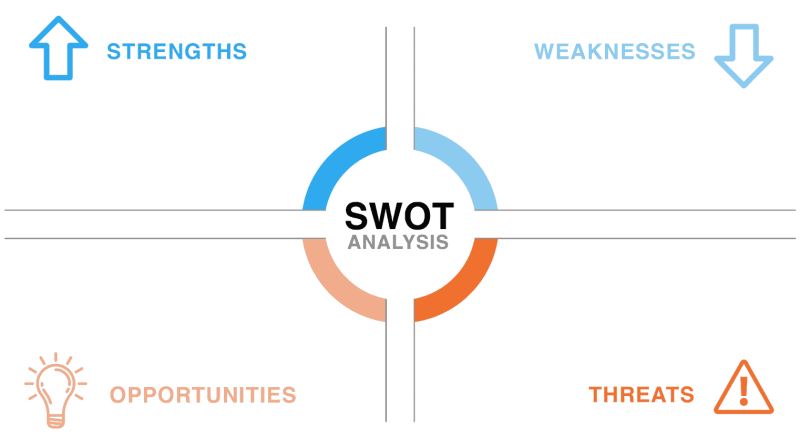
The way to use a SWOT analysis is simply to list a company’s strengths, weaknesses, opportunities, and threats in their respective quadrants. By completing this task for both your company and your key competitors, you will give yourself some visuals that will highlight insights you might not have previously identified.
2. Porter's Five Forces
While SWOT analysis focuses firmly on the micro, Porter’s Five Forces model is macro-focused and examines the industry as a whole. Developed by the godfather of competitive strategy Michael Porter in 1979, the Five Forces model provides a way to analyze the competitiveness of an industry by examining five fundamental forces, namely:
- Competitive Rivalry - This force involves the examination of competitive intensity within the industry. Considerations here include the number of companies within an industry offering similar products or services, the growth of the industry, and the ease with which customers can switch providers. Understanding the level of competitive rivalry within an industry can help companies understand market direction. If, for instance, there is a high level of competitive rivalry - as applied to the conditions set out by Porter, then the likelihood of price and advertising wars commencing will grow.
- Bargaining Power of Suppliers - The force refers to the level of control suppliers have over price within an industry. This force also assesses the number of suppliers within the industry. The lower the number of suppliers within the industry-wide supply chain, the greater the level of bargaining power the suppliers hold. The greater the number of suppliers, the lower the impact suppliers will have on pricing and profit margins. Similarly, with a greater number of suppliers present, the chances of supply chain disruption are minimalized.
- Bargaining Power of Customers - This force assesses the level of power held by customers within a particular industry and the impact this bargaining power has on price and quality. The inputs that go into bargaining power consideration include both the number of companies within an industry and the number of buyers. When there are a low number of sellers and a high number of customers, the bargaining power of customers will be low. The opposite is also true.
- Threat of New Entrants - This force examines the ease with which new competitors can enter the market. The barriers to entry to consider here include brand reputation, setup costs, supplier access, and economies of scale. One example of an industry that would have a high threat of new entrants would be e-commerce which has a significantly lower barrier to entry than traditional brick and mortar stores.
- Threat of Substitute Products - This force looks into the possibility of companies finding alternative products or services that can perform a similar function. One of the examples often cited in relation to this force is the shifts from CDs to digital streaming in the music industry.
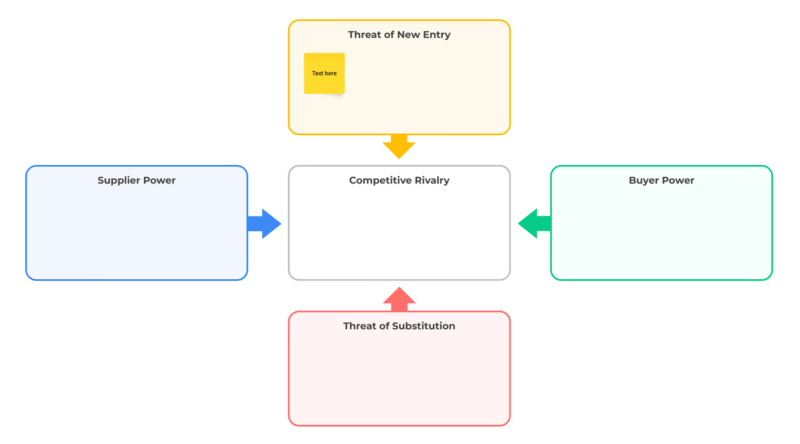
It is a good idea to apply Porter’s Five Forces model early in your competitive research process as it will help you place any competitor studies within their correct industry context. In terms of the work involved in using the Five Forces framework, you will need to gather up a lot of information on the way your market is structured - in particular data on suppliers, customers, and the number of competitors. You may already have a lot of this info on hand from existing competitive research, so internal systems would be your starting point, and, from there, you can start researching the missing pieces to get a clear picture of the Five Forces shaping your particular industry.
3. Porter's Generic Strategies
While we’re on the subject of Michael Porter, it might be a good idea to take a closer look at Porter’s Generic Strategies and how it might be used as a competitive analysis framework. Traditionally Porter’s Generic Strategies—cost leadership, differentiation, cost focus, and differentiation focus—are used to help companies develop their own strategic positioning. But, there is also some value in applying Porter’s Generic Strategies to the market as a whole and map out which strategy each of your competitors is competing on.
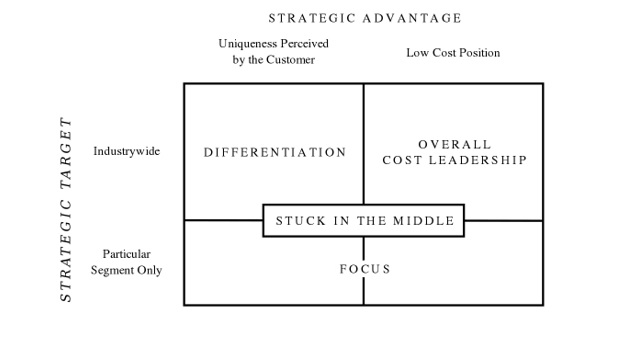
The way to use Porter’s Generic Strategies as an analysis framework is to input each of your competitors into the area of the quadrant that best suits their strategy. Complete the listing for each of your competitors and analyze the results. By putting together something like this graphic, it might help you look at your competitive landscape in a different way and help you identify possible insights you had previously overlooked.
4. Perceptual Mapping
Comparable in some ways to a mind map, the perceptual mapping framework is a diagrammatic technique you can use to work out how the various players within an industry are perceived by the target market. Perceptual mapping is usually done with a 2D graph and an X Y axis that tracks key attributes like price and quality but parameters can vary depending on which attributes are most important to a particular industry.
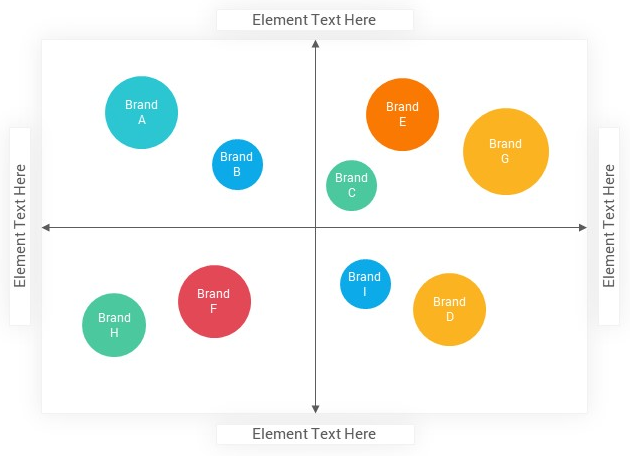
Perceptual mapping can be an extremely valuable technique if you are an early stage market entrant looking to establish positioning or a company planning a rebrand. Strategists can also use the perceptual mapping framework to identify market gaps - as denoted by the areas of the map which contain a lot of white space.
5. PESTLE Analysis
The PESTLE framework can be used as a strategic lens to help you interpret key external factors shaping your industry. The 6 factors in the PESTLE framework are:
- Political Factors - The political factors that shape an industry can include governmental stability, regulatory policies, and trade constraints. Political changes can disrupt market access, supply chains, and increase operational costs.
- Economic Factors - The economic factors involved in a PESTEL analysis include growth trajectories and interest rates which have the potential to impact pricing decisions and future customer spending potential.
- Social Factors - Social factors take in changes in demographics such as a possible aging population in a target market which could have the potential to impact future customer spending. Other factors may include evolving social norms, cultural attitudes, and work patterns.
- Technological Factors - Rapid shifts in technological development have the potential to disrupt industries. We are seeing this trend play out in real time with the impact of AI on businesses of all types today.
- Legal Factors - Industry regulations shape how businesses operate and determine compliance expenses, while consumer protection laws guide how products are designed and marketed. These legal factors can be complicated for companies operating in different jurisdictions with different laws and compliance requirements to adhere to.
- Environmental Factors - Depending on what industry your company is focused on, there may be some important environmental factors to consider. Climate change can impact business operations and supply chains, while expectations around sustainable business practices continue to grow.
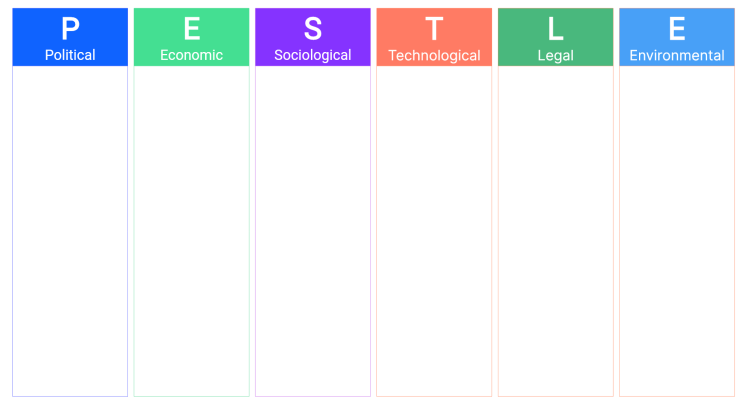
In terms of competitive analysis, the PESTLE framework is best used alongside more micro analytical tools like a SWOT analysis. PESTLE can help you understand the broader external factors shaping your industry which you do not have any control over and also provide important context for your micro analysis. Furthermore, PESTLE can help your company adopt a proactive approach to industry changes and can also help you to anticipate competitor moves.
6. Strategic Group Analysis
Strategic group analysis is a framework that helps to illuminate the competitive positions occupied by participant companies within an industry. The concept of the strategic group within an industry was first coined by Michael S. Hunt, a Harvard Professor in 1972 and, many years later, there is still a lot of value in this analytical framework. Strategic group analysis works by splitting the market into a number of strategic groups - those groups of companies who share the most similar characteristics in terms of capabilities, offerings, positioning, and market share. A further point to note is that an industry can contain one or more strategic groups while a strategic group can itself contain one or more member companies.
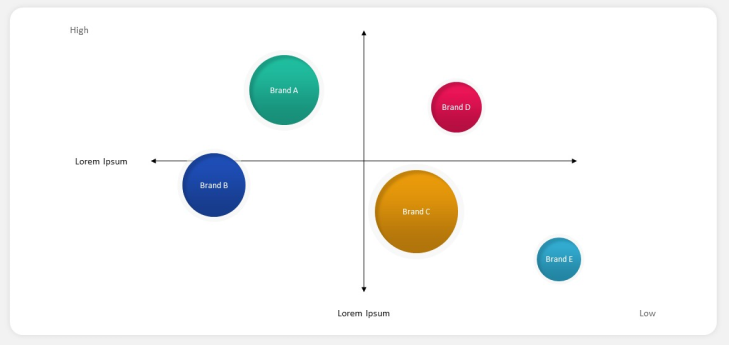
The way to build a strategic group analysis of your industry is as follows:
- List all your competitors and their key details (e.g. USP, capabilities, positioning, pricing, SWOT, marketing mix, size, etc.).
- Identify the key strategic characteristics that differentiate companies within your industry (e.g. price, branding, product quality etc.).
- Select 2 key strategic characteristics and draw your 2 variable map.
- Plot companies onto the map - combined into their respective strategic groups.
- Adjust the size of each circle to highlight the size of the market shares owned by each strategic group.
A carefully plotted strategic group analysis can help you finetune your company’s competitive positioning and white spaces on the map may also signify untapped opportunity areas within the market.
7. Growth Share Matrix
The growth share matrix is a framework developed by Boston Consulting Group and popularized by the company’s founder, Bruce Henderson in his 1970 essay, The Product Portfolio. Essentially, the growth share matrix is a way for companies to manage their portfolio of products and figure out how to allocate their resources.
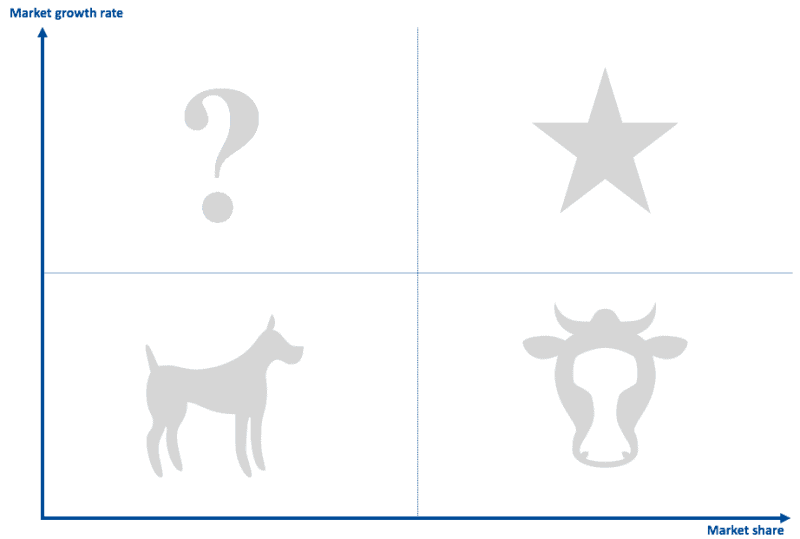
The growth share matrix is a four quadrant graph - with each quadrant representing a specific combination of relative market share and growth. The four quadrants represented are:
- Cash Cows: Low growth, high share. The BCG guidance is that cash cow companies should be milked for cash to reinvest in other products.
- Stars: High growth, high share. These stars should see significant investment.
- Question Marks: High growth, low share. Investment here depends on the chances of these question mark companies or products turning into stars. If star potential is low, these products should be discarded.
- Pets: Low share, low growth. These products should be liquidated, divested, or repositioned.
The growth share matrix is a good fit for companies who are managing multiple products or companies. It distills competitive research down to key details on market share and growth and, used in conjunction with more micro-analytical frameworks like SWOT can help you plot your companies strategic direction.